The fastest trains in the world aren’t built for speed alone. Their engines, braking systems, and safety controls are engineered to work together, even under the most demanding conditions.
Now imagine a company promising you the fastest train, with brakes it claims are just as reliable. But there’s a catch: it didn’t engineer or build those brakes.
They came from another manufacturer, designed to perform under certain conditions. They may work perfectly until the train reaches a speed or encounters a situation those brakes weren’t built to handle.
That’s the risk with applicant screening providers that prioritize speed while relying on someone else’s fraud detection technology.
Having brakes isn’t enough. You need to know who built them, what they can detect, and whether they’ll perform when you need them most.
Not All Fraud Detection Guardrails Are Built the Same
Today’s applicant screening providers promise fast approvals, accurate verification, and fraud protection. But many rely on third-party technology for fraud detection, income verification, and screening records.
Those tools may identify certain types of fraud or provide access to certain public records, but their capabilities are limited to what they were designed to detect or cover.
When providers don’t own or control that technology, they have less ability to identify weaknesses, address gaps, or improve detection as fraud evolves.
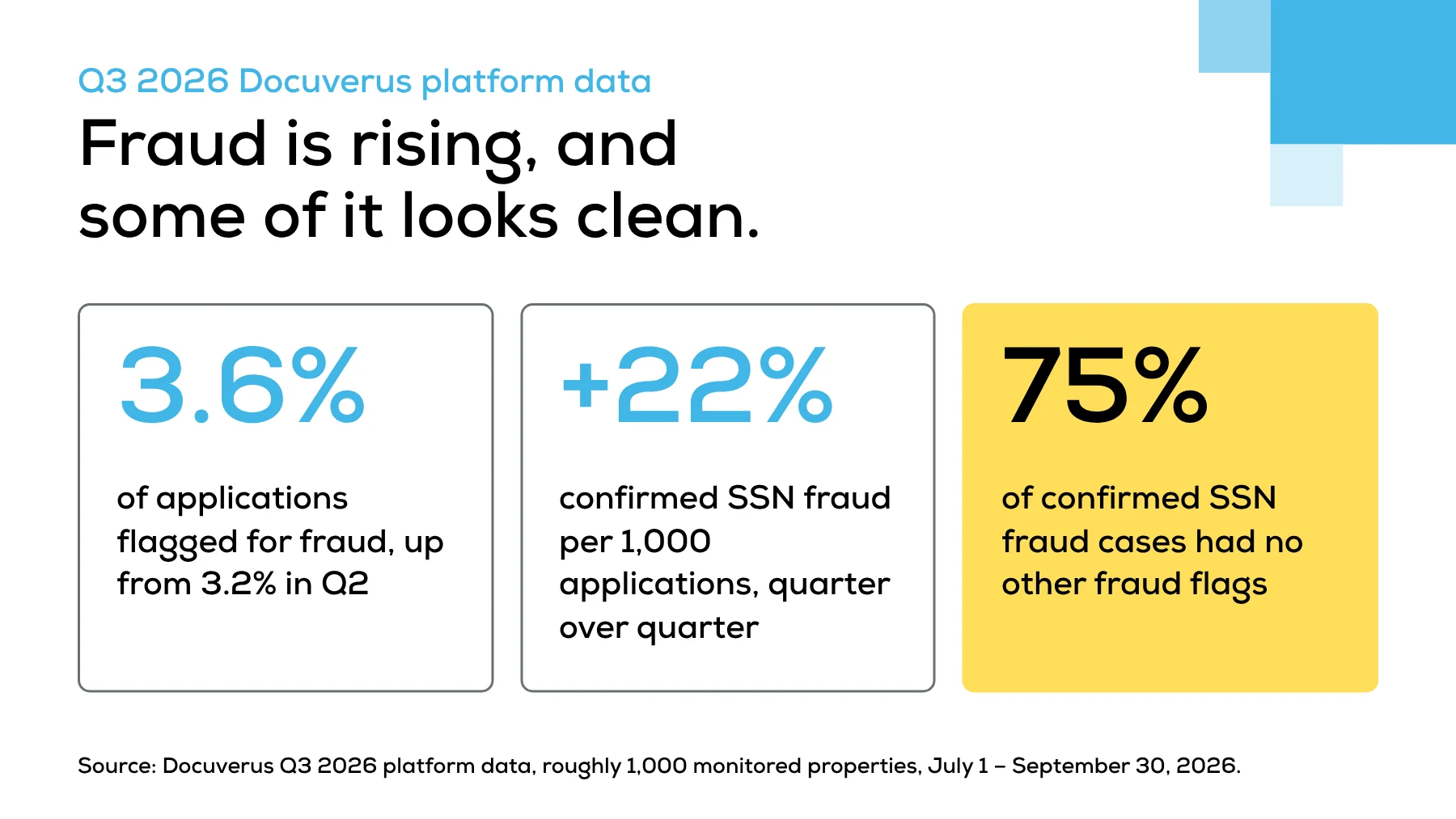
And sophisticated fraud continues to expose the importance of those safeguards. In Q3 2026, Docuverus-monitored properties saw:
- 3.6% of applications flagged for fraud, up from 3.2% in Q2.
- A 22% increase in confirmed SSN fraud per 1,000 applications, quarter over quarter.
- 75% of confirmed SSN fraud cases had no other fraud flags on the application.
When fraud slips through verification, the consequences can surface months later through unpaid rent, evictions, and costly write-offs.
A fast result means little if the technology behind it wasn’t built to catch the risk.
Five Questions to Ask Any Multifamily Fraud Detection Provider
Every provider will tell you it stops fraud. These questions show you whose technology is actually checking your applicants.
- Did you build your fraud detection, or does it come from a third party?
- Does your technology read the document’s contents and its metadata, or only scan how the document looks?
- How do you calculate gross and net income from a paystub with bonus or commission pay?
- When a document is flagged, does a person review it, so honest applicants aren’t slowed down by a false flag?
- When a third-party check misses fraud, who is accountable for the result?
A provider that built its guardrails can answer every one of these in detail. A provider that bought them may have to ask someone else.
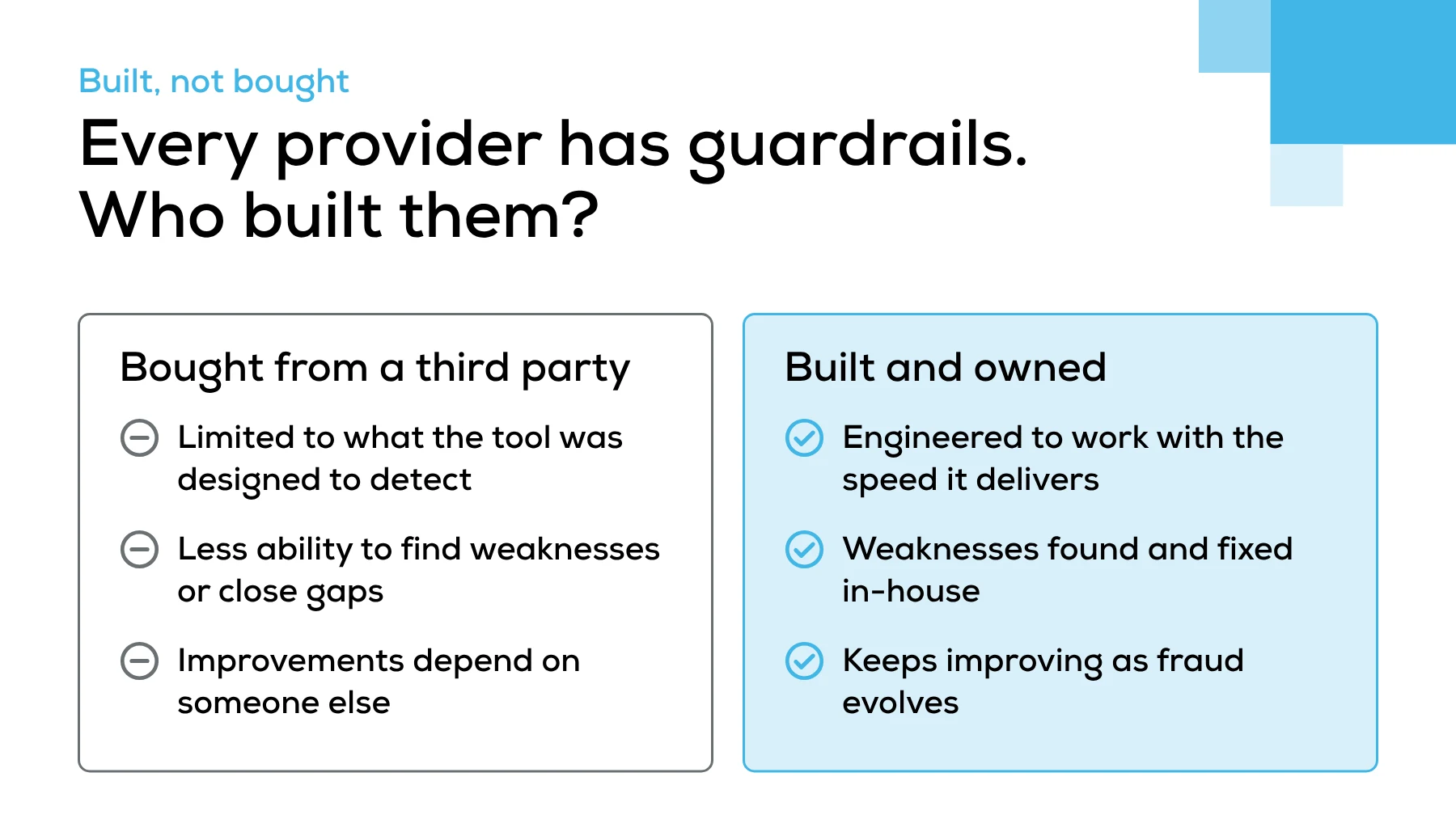
Built, Not Bought: We Engineered the Entire System
At Docuverus, we didn’t just build technology to move applications through faster and rely on someone else’s tools for fraud detection.
We engineered and built our proprietary document verification technology from the ground up, including both the technology that delivers speed and the guardrails that manage risk.
That translates into a verification process that includes:
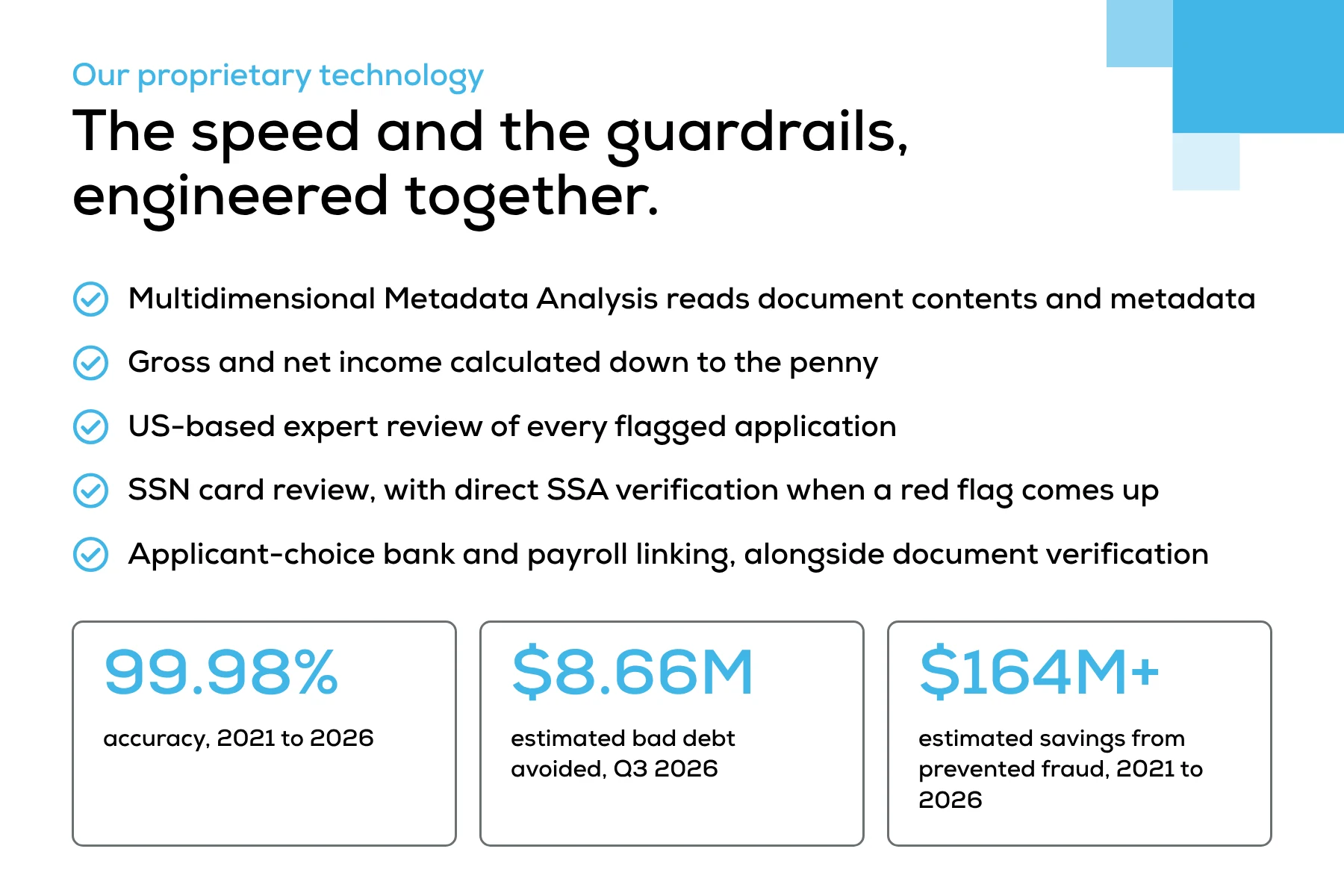
- Multidimensional Metadata Analysis that reads document contents and metadata to identify sophisticated fraud.
- Automatic income calculation from the documents themselves, with gross and net income calculated down to the penny.
- US-based expert review of every flagged application.
- SSN card review, with the ability to verify directly through the Social Security Administration when a red flag arises.
- Applicant-choice bank and payroll linking for flexibility without replacing thorough document verification.
Because we built and own our core verification technology, we understand its capabilities, control its development, and continuously improve our fraud detection as fraud evolves.
And the results demonstrate the value of that approach:
- 99.98% accuracy
- $8.66M in estimated bad debt avoided in Q3 2026
- $164M+ in estimated savings from prevented fraud-related evictions and bad debt since 2021
Speed Is Only as Good as the Technology Behind It
Every provider can promise a fast train. Every provider can claim to have reliable brakes.
But when those brakes are built by someone else, the company making the promise may not fully understand or control their limitations.
At Docuverus, we engineered both the speed and the safeguards because quality and accuracy shouldn’t depend on technology we don’t control.
You shouldn’t have to choose between filling units faster and protecting your NOI.
The fastest trains have the best brakes. Make sure you know who built yours.
Talk is cheap. Fraud is expensive. Test us for yourself.
Frequently Asked Questions
Why does it matter who built a screening provider’s fraud detection?
A provider that builds and owns its technology can find weaknesses, close gaps, and improve detection as fraud evolves. A provider relying on third-party tools is limited to what those tools were designed to detect.
What is built vs. bought fraud detection?
Built fraud detection is engineered and controlled by the provider that delivers your results. Bought fraud detection is licensed from a third party, so the provider can’t fully see its gaps or improve it on its own.
What should I ask a applicant screening provider about fraud detection?
Ask who built the technology, whether it reads document contents and metadata or only scans how the document looks, how it calculates gross and net income, how it verifies SSNs, and whether a person reviews flagged applications.
Why is SSN fraud hard to catch?
It often looks clean. In Q3 2026, 75% of confirmed SSN fraud cases at Docuverus-monitored properties had no other fraud flags on the application.
Does bank or payroll linking stop rental application fraud?
Not on its own. Fraudsters never link their accounts. That’s why Docuverus is documents first, with linking as an applicant option.
Does Docuverus approve or deny applicants?
No. Docuverus verifies applicant income and identity. Your team applies your criteria and makes the leasing decision.
Sources
- Docuverus, Multifamily Applicant Fraud Trends: Q3 2026 (October 12, 2026). Platform data from roughly 1,000 monitored properties, July 1 – September 30, 2026. Bad debt avoided is estimated at $8,000 per flagged application.
- Docuverus Real Results, 2021 to 2026 (September 2026): 99.98% accuracy and $164M+ in estimated savings.